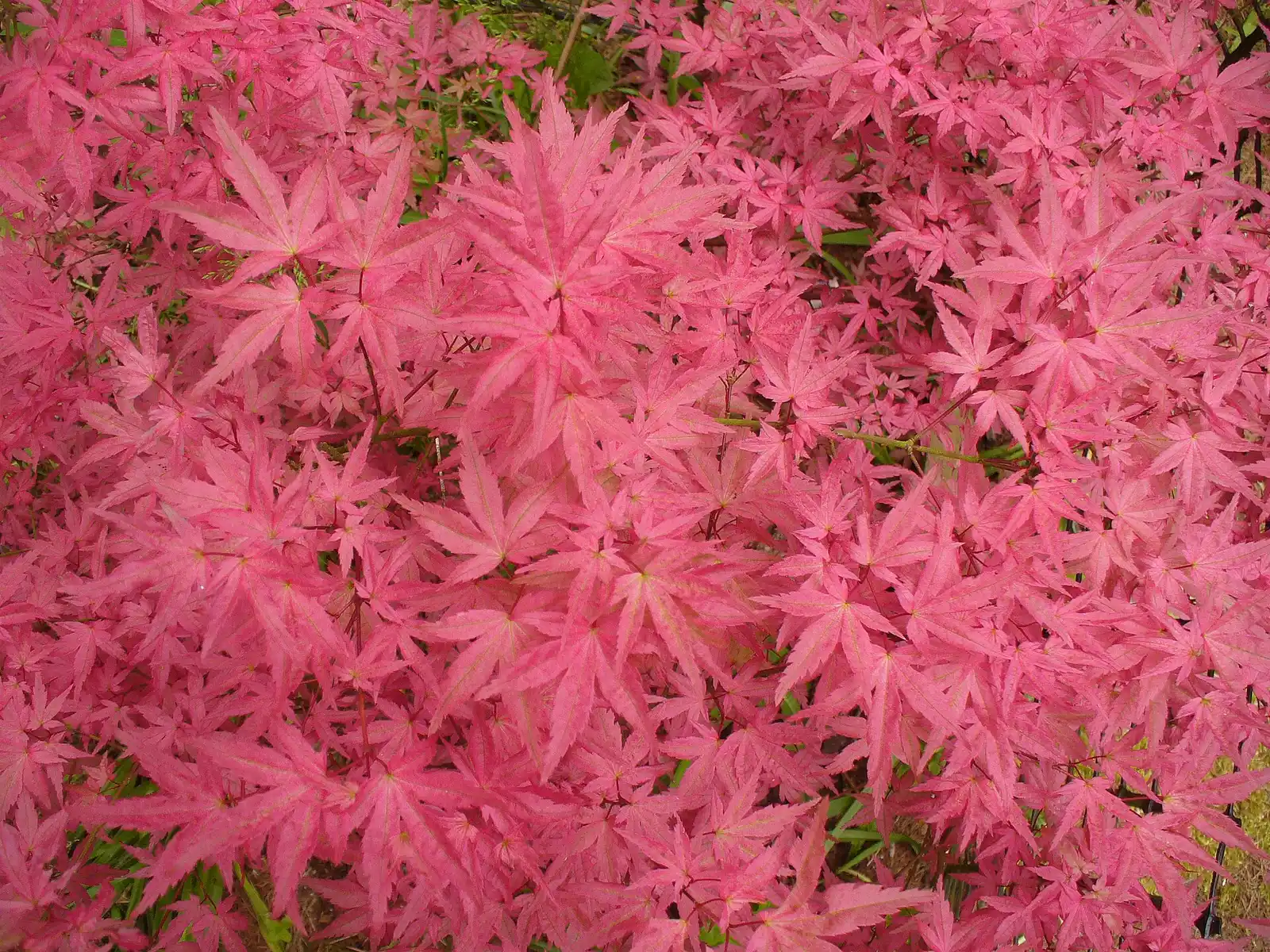
For a few weeks every year, the woods and gardens of the UK put on a show that no summer can match. Beech turns copper, larch turns gold, and the Japanese maples in the great arboretums blaze red and orange. On a still, bright October day, with the leaves reflected in a lake, it is as beautiful as anywhere in the world.
These ten places are some of the best for autumn colour, from the arboretums of the south to the big trees of Perthshire and a forest park beneath the Mourne Mountains. Some are gardens with an entry charge, and some are open woodland you can walk in for nothing. For more ideas, see our guides to the UK’s gardens and the best walks.
The colour depends on the weather, and it moves quickly. The show usually starts in the north and on high ground and works south, and one windy night can bring the leaves down. Opening times, prices and booking rules change, so check before you go.
1. Westonbirt, the National Arboretum, Gloucestershire
Westonbirt is the place many people think of first when they think of autumn colour in England. It is looked after by Forestry England, a few miles from Tetbury on the southern edge of the Cotswolds. Its collection of trees, gathered from around the world, is one of the finest anywhere.
The arboretum was begun in 1829 by Robert Holford, a wealthy landowner, and his son George carried on the work. They planted trees for their shape and their colour, laying out rides and glades so that the views would change as you walked. Nearly two centuries later, those trees are at their full height.
In October, the Japanese maples are the stars. The Acer Glade in Silk Wood becomes a tunnel of red, orange and yellow, and on a sunny afternoon the light coming through the leaves is extraordinary. The Old Arboretum has some of the oldest and most famous trees, with wide paths between them.
A treetop walkway takes you up among the branches, so you can look down on the canopy as well as up at it. It is level and suitable for pushchairs and wheelchairs, which makes it easy for all the family. There is a café, a shop and a plant centre.
October weekends are very busy, and in peak weeks you may need to book a time to arrive. Coming on a weekday, or early in the morning, is far calmer. See our Cotswolds villages guide to make a weekend of it.
2. Sheffield Park and Garden, East Sussex
Sheffield Park, near Uckfield in East Sussex, is a landscape garden laid out around a chain of lakes. It is looked after by the National Trust. In autumn, the reflections of the trees in the still water make it one of the most photographed gardens in England.
The garden was shaped in the eighteenth century, with advice from the great landscape designers Capability Brown and later Humphry Repton. In the early twentieth century, a new owner, Arthur Soames, planted many of the trees that give the garden its autumn fame. Among them are tupelos, maples and swamp cypresses, which turn deep red and rusty orange.
The paths lead round the lakes and over the cascades between them, with a new view at every turn. There are also woods and open parkland to walk in, where the crowds thin out. The garden is lovely in spring too, with azaleas and rhododendrons, but autumn is its great season.
Sheffield Park has a surprising sporting history. Lord Sheffield, who owned it in the nineteenth century, had his own cricket ground here, and touring teams from Australia played on it. The ground has been restored.
The Bluebell Railway, a heritage steam line, has a station a short walk away, and combining the two makes a good family day. The garden is busy on sunny weekends in October. It is about an hour from Brighton, and a little more from south London.
3. Winkworth Arboretum, Surrey
Winkworth Arboretum, near Godalming in Surrey, is a hillside of trees planted for colour. It was created from the 1930s by Dr Wilfrid Fox, a doctor who wanted a garden that would glow in spring and autumn. He gave it to the National Trust in the 1950s.
The arboretum falls steeply down a valley to two lakes, so the views across the treetops are the best part. In autumn, the maples, sweet gums and cherries turn brilliant shades of red and gold. From the boathouse at the bottom, the colour is reflected in the water.
Winkworth is smaller and quieter than Westonbirt, and it is one of the best autumn days out within easy reach of London. It is lovely in spring too, when the azaleas are in flower and the bluebells cover the woods. The paths are steep in places, so wear good shoes.
There is a small café and a car park that can fill on fine weekends. The nearest stations are Godalming and Milford, a few miles away, so most people come by road. Combine it with lunch in one of the villages nearby.
4. The New Forest, Hampshire
The New Forest is one of the finest places in England to see an ancient woodland in autumn. It was made a royal hunting forest by William the Conqueror in the eleventh century, and it became a national park in 2005. Its great beeches and oaks turn gold and copper from October.
Ponies, donkeys and cattle graze freely across the forest, and in autumn you may also see pigs. They are let out in a tradition called pannage, to eat the fallen acorns, which are poisonous to the ponies. Please do not feed or touch any of the animals, however friendly they look.
The Rhinefield Ornamental Drive runs through some of the tallest trees in the forest, many planted in the Victorian era. Near it, the Knightwood Oak is thought to be around five hundred years old, and it is known as the Queen of the Forest. At the Bolderwood Deer Sanctuary, a viewing platform looks out over a meadow where deer often gather.
Lyndhurst, Brockenhurst and Burley are the forest’s best known villages, with pubs, tea rooms and walks from the door. Many of the roads are unfenced, and animals wander across them day and night, so drivers take it slowly. It is a short journey from Southampton and Winchester.
See our Southampton guide and Winchester guide. The forest is busy at weekends in the half term holiday. A quiet weekday walk among the beeches is autumn at its best.
5. The Forest of Dean and Symonds Yat, Gloucestershire
The Forest of Dean lies between the rivers Severn and Wye, on the border of England and Wales. It is one of the last great ancient forests in England, and in autumn its oaks and beeches turn every shade of brown and gold. It feels a world away from the nearby cities.
Much of the oak was planted in the nineteenth century to build ships for the navy, but by the time it was grown, ships were made of iron. The trees stayed, and today they make some of the finest oak woodland in the country. The forest also has a long history of mining, and small mines are still worked by local freeminers.
Symonds Yat Rock is a viewpoint high above a great loop of the River Wye, with the woods spread out below. In autumn, with mist rising from the river in the morning, it is one of the most beautiful views in Britain. Peregrine falcons nest on the cliffs nearby.
The Sculpture Trail at Beechenhurst is an easy walk through the woods past works of art made for the forest. Puzzlewood, an ancient wood of moss-covered rocks and twisting paths, has been used as a filming location for several famous films and television series. Children love it.
The forest is about half an hour from Gloucester and a little further from Hereford. See our Hereford guide. Some attractions close in winter or on certain days, so check before you go.
6. Waterfall Country, Bannau Brycheiniog
At the southern edge of Bannau Brycheiniog, the national park once called the Brecon Beacons, four rivers tumble through wooded gorges. The area is known as Waterfall Country, and it has some of the most beautiful waterfalls in Wales. In autumn, with the beech and oak woods turning around them, they are at their finest.
The Four Waterfalls Walk links several of the best falls along the rivers Mellte and Hepste. At Sgwd yr Eira, the path runs behind the falling water, so you can walk under a curtain of white spray. It is an experience people remember for years.
Autumn rain makes the falls louder and more powerful, which is part of the thrill. It also makes the paths muddy and the rocks slippery, and some sections are steep. Wear walking boots, take care near the edges, and allow more time than you think.
The villages of Pontneddfechan and Ystradfellte are the usual starting points, with car parks that fill early on fine weekends. Mobile signal is patchy in the valleys. Arrange your pickup point and time before you set off.
Waterfall Country is about an hour from Cardiff and Swansea. See our Cardiff guide and Swansea guide. Pair it with a pub lunch in one of the villages nearby.
7. Borrowdale and Tarn Hows, the Lake District
The Lake District is beautiful at any time, but in autumn the colours of the fells change completely. The bracken on the hillsides turns a deep rust red, and the larches turn gold before they drop their needles. With the first snow on the high tops, the contrast is spectacular.
Borrowdale, south of Keswick, is often called the most beautiful valley in England. The road runs beside Derwentwater, past oak woods that glow in the low autumn sun. Ashness Bridge, a little stone packhorse bridge with a view of the lake, is one of the most famous spots in the Lakes.
Tarn Hows, between Coniston and Hawkshead, is a small lake ringed by woods and fells, with an easy path all the way round. It was created in the nineteenth century by joining several smaller tarns, and it is now looked after by the National Trust. In autumn, the reflections are perfect on a still day.
Grasmere and Rydal Water, where William Wordsworth lived, are lovely in autumn too, and the walk between them is easy. The roads are narrow and the car parks small, so a driver who drops you at one end and collects you at the other makes a linear walk simple. Weather changes fast on the fells.
See our Lake District weekend guide. The October half term is one of the busiest weeks of the year in the Lakes. A weekday in early autumn is quieter.
8. Bolton Abbey and Strid Wood, Yorkshire Dales
Bolton Abbey is an estate on the banks of the River Wharfe in the Yorkshire Dales, owned by the family of the Duke of Devonshire. At its heart are the ruins of Bolton Priory, founded by Augustinian canons in the twelfth century. The nave of the priory church is still used as a parish church today.
The river, the ruins and the wooded hillsides have drawn artists for centuries, including the painter Turner. In autumn, the trees along the river turn gold and orange, and the views are wonderful. Stepping stones cross the Wharfe beside the priory, a favourite with children.
Upstream, Strid Wood is one of the largest areas of ancient oak woodland in Yorkshire, and it is protected for its wildlife. The paths follow the river through the trees. The woods are at their best in October.
The Strid itself is a place where the whole river is forced through a narrow channel of rock. It looks as though you could step across it, but the water is deep and fast, and the rocks are slippery. Admire it from the path and never try to jump it.
There is a charge for parking on the estate, and paths are well marked. Bolton Abbey is about forty minutes from Leeds and Bradford, near Skipton and Ilkley. See our Leeds guide.
9. Perthshire, Big Tree Country
Perthshire calls itself Big Tree Country, and in autumn you can see why. Its glens are filled with some of the tallest and oldest trees in Britain, and the colours of its birch, beech and larch woods are superb. Many people think it is the best place in Scotland for autumn colour.
The Hermitage, near Dunkeld, is a woodland walk beside the River Braan, looked after by the National Trust for Scotland. Among its giant Douglas firs is one of the tallest trees in Britain. Ossian’s Hall, an eighteenth century folly, overlooks the thundering Black Linn Falls, and in autumn you may see salmon leaping.
Further north, near Pitlochry, the Queen’s View looks along Loch Tummel towards the mountains, with woods of gold and orange below. Queen Victoria visited it in the nineteenth century. In autumn, Faskally Wood near Pitlochry has in many years hosted a light show after dark, so check what is on.
The Birks of Aberfeldy, a wooded gorge celebrated by Robert Burns, is another lovely autumn walk. At Fortingall, a yew tree in the churchyard is thought to be one of the oldest living things in Europe. Dunkeld itself has a ruined cathedral on the river bank.
Perthshire is about an hour from Edinburgh and Glasgow, and less from Perth and Dundee. See our Perth guide. Scotland’s colour often peaks a little earlier than the south of England.
10. Tollymore Forest Park, County Down
Tollymore Forest Park lies at the foot of the Mourne Mountains, near Newcastle in County Down. It opened in 1955 as the first state forest park in Northern Ireland. In autumn, its woods of beech, oak and larch turn glorious shades of gold.
The Shimna River runs through the park, crossed by old stone bridges and stepping stones. The walks along the river are among the most beautiful in Northern Ireland. The water is often dark and fast after autumn rain.
The park was once the estate of the Earls of Roden, and it is full of follies, gateways and grottoes from the eighteenth century. The Barbican Gate and the gothic arches along the drives give it a fairytale look. Some of its woods were used as filming locations for a famous fantasy television series.
There are walks of every length, from a gentle stroll by the river to a climb onto the lower slopes of the Mournes. Newcastle, just down the road, has a long beach and views of Slieve Donard, the highest mountain in Northern Ireland. It makes a lovely day with lunch by the sea.
Tollymore is about an hour from Belfast by road. See our Belfast guide and Newry guide. There is a charge for cars entering the park.
When to go
In most years, the colour is at its best from the middle of October to the start of November. It comes earlier in Scotland, in the north of England and on high ground, and later in the south and near the coast. Bright, sunny days and cold nights give the strongest reds.
A dry summer can make the leaves turn early and fall quickly, and one storm can strip a wood in a night. Many gardens and arboretums post updates on how the colour is looking. Check before you set off, and go sooner rather than later.
Getting there
Most of these places are in the countryside, down narrow roads, with car parks that fill by mid-morning on a sunny October weekend. A car booked by the hour takes you to the gate and waits, so nobody has to hunt for a space or drive home tired after a long walk. It also makes a linear walk easy: drop off at one end, collect at the other.
The price is fixed before you confirm, and you can add a second stop, such as a village for lunch or a tea room on the way home. See 10 ways to use a car by the hour for more ideas.
Autumn colour does not wait. Pick a fine day, go early, and let someone else do the driving while you look out of the window.
Ride with ZeroLanes. A car booked ahead, at a price fixed before you confirm, with the driver and the car on your journey page before pickup. Book a car by the hour.